You may keep postponing your first tailoring visit because choosing one garment means leaving several other good candidates at home. So the pile sits there. Every piece feels equally worth fixing, which means none of them get fixed.
To make that decision easier, alterations are ranked here by weighing the cost of each one against how much more often you're likely to wear the finished piece. The order matters, so if you can only begin with one garment, start with number one.
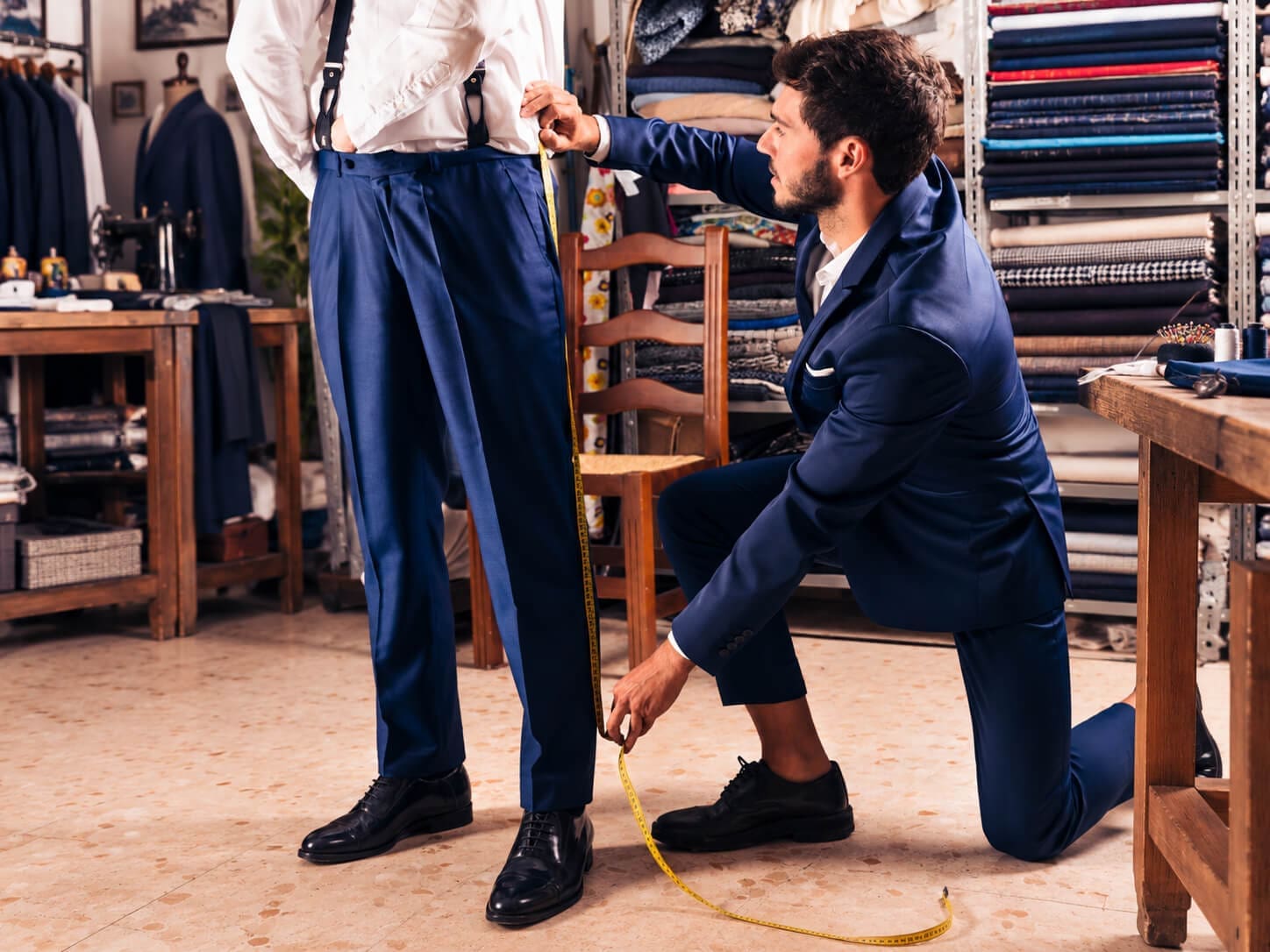
Start with the trousers you already reach for. A proper hem makes them look cleaner and feel easier to wear the very next time you get dressed. Your shoes determine the right length, so bring the pair you normally wear with them.
Ask your tailor for a slight break, where the hem creates one soft crease at the top of the shoe.
Bring these two things to your fitting: the trousers you wear regularly, and the shoes you usually pair with them. That is all you need for your first tailoring visit. Start with this one practical adjustment, wear the trousers again, and notice how much better the right length pulls the entire look together.
Sleeve length can make a jacket look polished or noticeably off, even when you cannot identify the problem right away. Correcting it creates a cleaner line through your arms and improves the overall proportions of the jacket. Choose the blazer you already wear regularly so the adjustment makes an immediate difference.
Does your jacket have functional cuff buttons? Tell your tailor before the work begins. The buttons and buttonholes may need to move with the shortened sleeve.
Take the shirt you usually wear underneath the jacket to your fitting. This helps your tailor leave the right amount of shirt cuff visible and set a sleeve length that works with your usual outfits.
The logic shifts with this third alteration. Instead of improving something you already wear, you bring back a garment you like but have quietly stopped reaching for. If the waist is the only problem, one focused adjustment could return that piece to your regular rotation.
Depending on the garment's construction, your tailor may adjust the center-back seam, the side seams, the darts, or the waistband and lining.
This alteration ranks third because it applies to a more specific fit problem. However, if you already own trousers or a skirt that fits everywhere except the waist, move it higher on your personal list. You are not trying to reinvent the garment, you are removing the one issue that keeps you from wearing it.
A coat shapes the first impression of nearly every cold-weather outfit because it covers the clothing underneath. However, many mid-range coats use a boxier cut to leave room for sweaters, blazers, and other layers. Taking in the waist can add definition while preserving enough space for comfortable layering.
Prepare for the fitting: Wear or bring the layers you normally put under the coat, and keep your arms relaxed so the tailor can check movement and comfort. Expect an additional fitting if the coat needs more shaping.
This alteration involves more construction than a simple hem or sleeve adjustment. Still, the right fit can turn a bulky-looking coat into one you feel confident wearing throughout the season.
You probably already know which garment belongs in this final spot. You love how it looks, feels, or fits everywhere except in one frustrating area. Correcting that single issue could finally move it from the back of your closet into your regular rotation.
The key is one clear problem. A garment with one fixable flaw gives your tailor a focused starting point. However, several overlapping issues may require extensive reconstruction and change the garment more than you expect.
If you only do one thing from this entire list, do the trousers. Take the pair you already wear most, along with the shoes you usually pair with them, and get the hem set correctly.
It's the least expensive entry, the fastest turnaround, and it shows you exactly how the whole process works before you commit any more time or money to anything else on this list.
Not every garment is worth this yet, and saying so plainly is what makes the ranking above trustworthy rather than just a sales pitch.
The five above cover common clothing alterations for most wardrobes, but they won't cover your whole closet. To sort everything else you own, ask yourself three questions, in this order:
Weigh them in that order: Wear frequency first, construction second, problem count last. Test it on something not mentioned above, a sweater that's fine except for stretched-out cuffs, say. High wear, decent construction, one problem. That one moves up fast, ahead of whatever else is sitting in your pile.
You don't need to alter five pieces at once or overhaul your entire wardrobe. Start with the trousers, skirt, jacket, or dress you'd wear more often if one frustrating fit issue were fixed.
Take that piece to Custom Fine Dry Cleaning in Hendersonville, North Carolina for an assessment. Our team handles common clothing alterations, including hemming, waist and seam adjustments, zipper replacements, and basic repairs. For trousers, skirts, or dresses that need hemming, bring the shoes you typically wear with them so the correct length and proportions can be determined.
Call us today or schedule a pickup to get started with that one piece you've been meaning to fix.
Phone: +1 828-977-8509
Address: 423 N. King St., Hendersonville, NC, 28792, United States
Email: customfinecleaners@gmail.com